
Health, Nutrition & Population
Planning for Health Human Resources for Health Sector in Vietnam
One of the challenging aspects in planning of human resource system in health sector was assign to develop HRH framework that it should be country led, easily adaptable in the country’s socio cultural milieu, simple to understand and fits in the health care system of the country. This was possible using well establish WHO HRH Action framework along with 4ME formula using the standard formats based on the specific guidelines for each level of health care institution. Current report is consider an outline, as HR planning guidelines for the country that requires enormous efforts of policy makers to advocate for a uniformity of health service based on population norms and computerized HR database that caters the needs developing HR plan as well in achieving MDG set for country. However, the major challenge is yet to be execute making this framework feasible to the country’s health care system compounded with complex procedure and norms, which require radical reforms in setting up criteria as well as in the allocation of the resources. The policy makers and programme manages will put all their efforts in materializing such scientific approach to deal issues related to human resource and narrow the gap between demand and supply for the better management and development of human resources. Circulation: Strictly restricted for more details contact: drharshitsinha@consultant.com
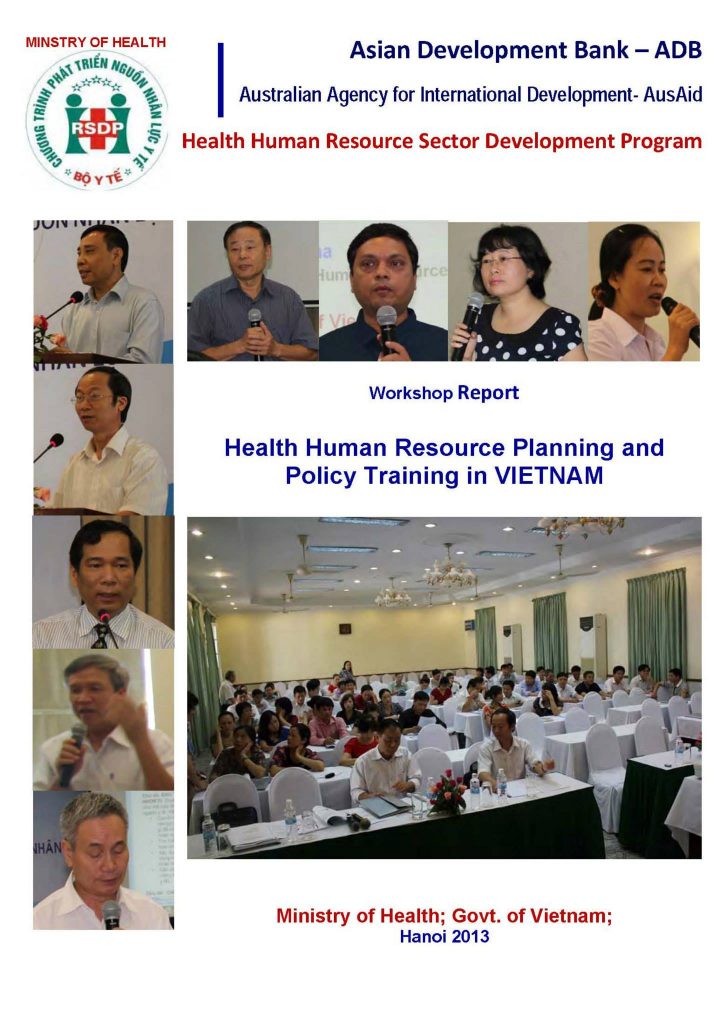
Health Human Resource Planning & Policy Training in Vietnam
The World Health Organization has projected health human resource in health sector as global issue at the top of international agenda, as majority of the countries are facing this acute problem. Vietnam is no longer an acceptation, as ministry of health took this as an important task. It had planned capacity building of health planners, with assistance from international specialist on health human resources development planning reform through HHRSDP Project Management Unit. To me it becomes equally challenging, as the process of HR planning should be simple enough to fit in the current structure of public health system of the country. Adopted the World Health Organization’s HRH framework having four action phases and six element of planning, by developing formats for HR data collection using ‘4ME’ formula using bottom up approach, helped the policy and programme managers to look insight of the problem for better HR planning at Province, Central and Country level. These efforts has successfully streamlined in the current public health system of the country but has put forward demanded with early computerization to deal such a huge database and thus also suggested to have clear guidelines to implement the same. The country forward to articulate the innovation made in the current workshop for future implementation as per the demand of the country. Circulation: Strictly restricted for more details contact: drharshitsinha@consultant.com
Situation Analysis of Health Human Resources for Health Sector in Vietnam
Vietnam has made significant progress to reduce the poverty. It had achieved success in attaining some of the significant target in health sector. However the country is facing an acute problem related of human resources which has thwart their health service delivery system at many fronts (shortage of staff; uneven distribution service centres as well staff, technical competency; low retention and poor motivation among the staff, other related HR challenges etc), that needs to be address systematically. Here an attempt is being made to understand the problem doing the situation analysis of health status of the country and suggests some of the strategic interventions with effective measures for the future sustainability and avert the mounting pressure of human resource in health sector. The policy makers and programme manager will assimilate the inference through structural integration in the health ministry so as to operationalizing the strategic task as recommended. Circulation: Strictly restricted for more details contact: drharshitsinha@consultant.com
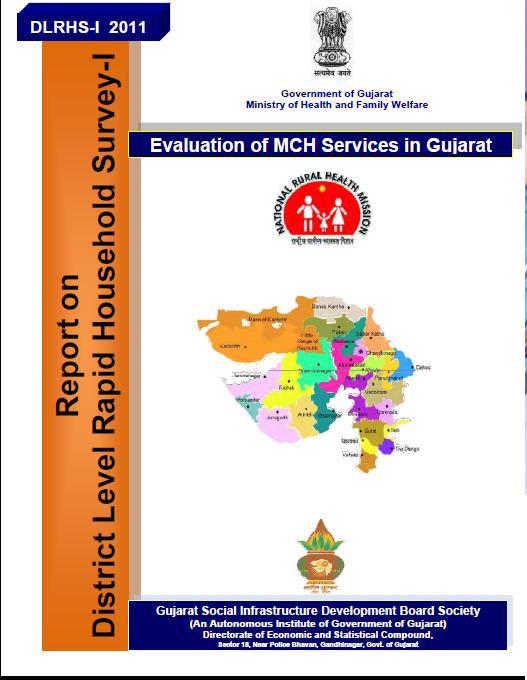
Evaluation of Maternal and Child Health in Gujarat
Gujarat state of India has come a long way in improving the health indicators since independence, but progress in reducing vital rates (CBR, CDR, IMR, MMR etc) has been slow and largely unmeasured or documented. There are several challenges for reducing these vital statistics to be target to assess progress towards achievements of MDG. In spite of several national level surveys (NFHS & RCH) there are several challenges yet to be address to know the reach of the services being imparted to the resident population in an area. Government of Gujarat has initiated its efforts to know the status of some important MCH service indicators as well vital statistics at district level and the state level in the state of Gujarat. Taking lead from this Gujarat was the first State in India who took initiative for district level estimates by conducting District Level Rapid Household Survey (DLRHS) for evaluating MCH services (on some focused indicators) in the state of Gujarat taking proportionate sample from all 26 districts. The first time learning experience shows wide variation of MCH services among the districts of the Gujarat that have affected vital statistics. Circulation: Restricted for more details contact drharshitsinha@consultant.com
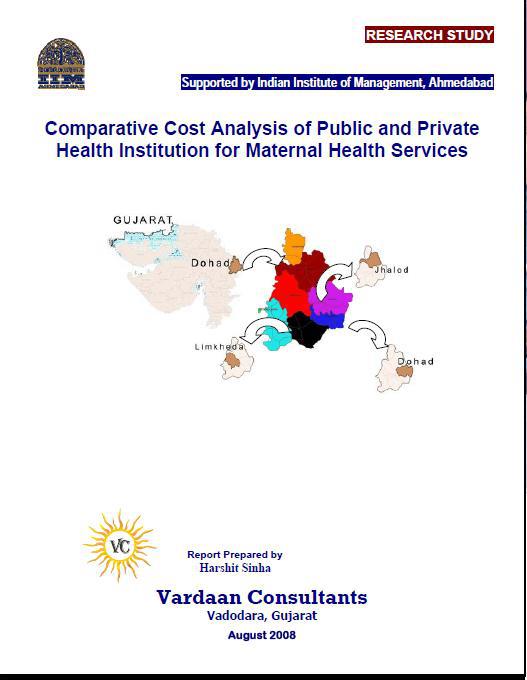
Comparative Cost Analysis of Public and Private Health Institutions for Maternal Health Services
During 11th plan, the Government of India had given major thrust to lower down maternal and infant mortality by promoting institutional deliveries in family welfare programme. Gujarat has implicitly adopted the same by introducing Chiranjeevi Yojana using voucher system under public private partnership with private gynaecologist. However, sustainability of the package remains at stake with the growing market prize that affects the partnership with empanelled doctors in the ongoing Maternal Health Scheme. The current study is conducted in the public health institutions located in remote and backward areas at secondary and tertiary level of public health institutions in Dahod district. The study is conduct to know the cost implication of delivery services in public health institutions during pre, post implementation of Chiranjeevi Yojana, and compare the result of the study with the existing market rates and the financial package of the ongoing maternal health scheme. We hope the recommendation of the study will play a major role in revising the ongoing financial package of Maternal Health Scheme (Chiranjeevi Yojana) with better strategy. Circulation: Easily available on IIMA site.
Evaluation of Empaneled Service Provider under Chiranjeevi Yojana in Gujarat
The Government of India had given major thrust to lower down maternal and infant mortality by promoting institutional deliveries in family welfare programme. Gujarat has implicitly adopted the same by introducing Chiranjeevi Yojana using voucher system under public private partnership with private gynaecologist. Given the reality that the women particularly belonging to BPL may not have adequate financial resource to utilize private medical services and appropriate mechanism to finance the health care in general are not available restricted high infant and maternal mortality. The current study is conduct to assess quality of obstetric care given by the empanelled doctors and their satisfaction level in context to the maternal health-financing scheme. The study was conduct in five pilot districts among 50 empanelled doctors under pre-defined criteria. The pilot experience shows that all most all doctors have better infrastructure but there is shortfall of qualified human resource. In the absence of standard manual and guidelines at policy and programme level, it was difficult to judge the technical competence of doctors. However, information on maternal and infant shared showed the reducing trends. Circulation: Easily available on IIMA site.
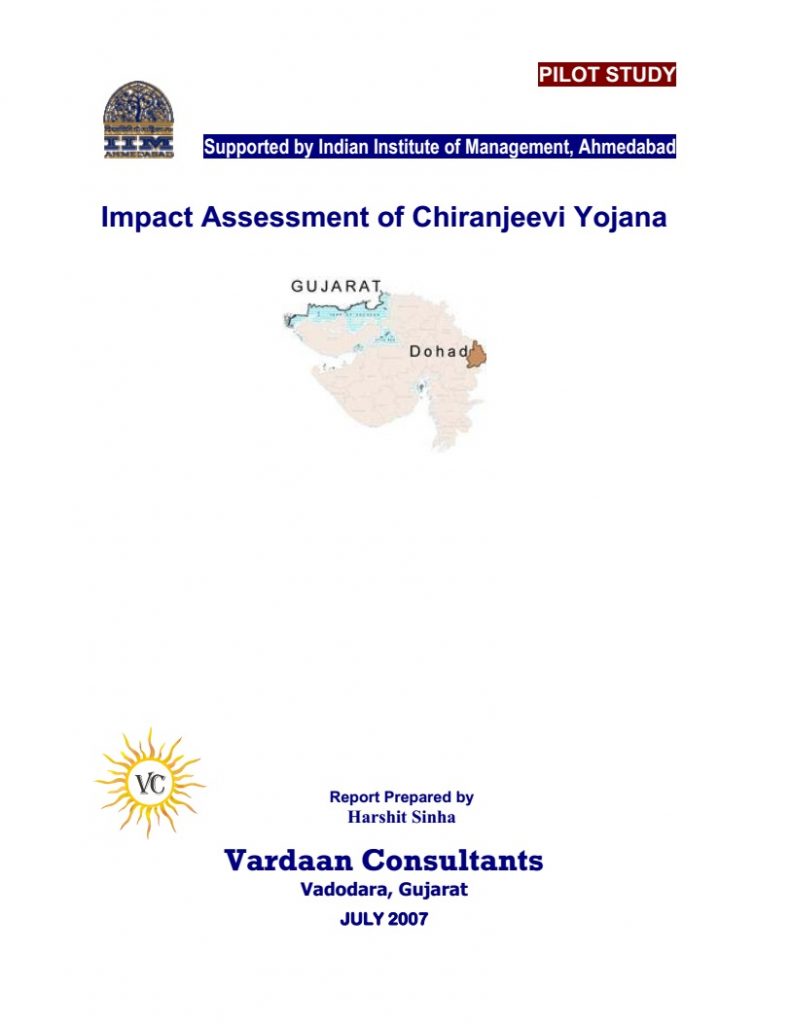
Evaluation of Chiranjeevi Yojana in Dahod district of Gujarat
India is committed to achieve reduction in maternal and infant mortality rates as articulated in the National Population Policy 2000. Thus, the Government of India has given efforts aimed at lowering maternal and infant mortality by promoting institutional deliveries under the national Family Welfare Programme. The Government of Gujarat has implicitly adopted the same and initiated “Chiranjeevi Yojana” for BPL families to promote institutional delivery through partnership with private doctors. It is envisaged that this effective package of obstetric and child health services provided within reach of the communities and families living below poverty line can successfully reduce maternal and childhood. Owing to its previous two studies, The Indian Institute of Management, Ahmedabad in its continuing efforts decided to undertake pilot study where this scheme have been launched and must have completed one year of its implementation. Dahod was one of the pilot districts, where this scheme was launch with other four backward districts in Gujarat and which has been in operation since one year. This study was aim to understand the utilization pattern among women and measure the impact with previous delivery and with general population. The scheme was thoroughly evaluated taking the perspectives of both clients and service providers associated with this Yojana. A critical analysis is done with other ongoing schemes, initiated under NRHM and explores the effective ness of the package of Chirnajeevi Yojana. Circulation: Easily available on IIMA site
Revenue Sustainable Model in Health Sector
Uttar Pradesh government has set out ambitious goals for itself in the health sector in its Eleventh Five Year Plan (2008-12). One-sixth of the world’s population lives in India and one-sixth of India’s population lives in UP. The biggest resource for Uttar Pradesh is its large population and about 51.68 per cent of the state’s population is in the 15-59 age groups. In the years to come, the large and young working population of the state is going to be the chief asset for the state. If the state is to reap the benefits of a demographic dividend and become an economic powerhouse, it will have to ensure that people are healthy and live long. However the challenges are enormous looking at the huge gap between demand and supply of manpower, infrastructure, orientation and training, provision of all types of health services and existing pitfalls in vertical administrative control. With the shrinking budgetary support and growing fiscal problems, state governments are finding difficulty in expanding their public facilities to cater to the growing healthcare needs of the population.
Thus requires a massive scaling up of investment in health, especially in rural health services. The most probable and effective option lies in public private partnership. Many state governments have already taken up such initiatives and these have yield a good results by making the regulatory mechanism transparent and accountable. However looking at similar efforts done all over the country and in the world, I have tried to give a competitive edge to the subject matter in context to India. The report is divided into five chapters. The first chapter narrates relevance of the study and justifies public private partnership to develop a revenue sustainable model in the health sector. It also describes previous work done in this area. The second chapter gives the description of the study with objectives, methodology, study design and sample framework, while the third chapter describes the findings of the research study. The fourth chapter justifies the findings with probable revenue sustainable model for the health sector in the context of public private partnership and quotes Indian examples in this area. The Policy implications with recommendations and conclusion of the study are given in the last chapter. The report is available at http://varfound.org/wp-content/uploads/2015/01/Revenue-sustainable.pdf
Rehabilitation Model, Component & Strategies in Mental Health Sector
It is well known fact that rehabilitation in mental health is a complex and broad issue that is yet to be explored scientifically. On the other hand, it is an eye-catching term, laudable slogan and widely pronounced jargon, but rarely, it finds its real meaning in practice. Vardaan Foundation with the help of royal Netherlands agencies and subsequently with support of IIMA, devised a hospital based community rehabilitation model. The idea is to address the issues related to rehabilitations, and issues of psychiatric and psychosocial support, social integration of the patient, who have received mental health treatment in the community with structural integration of existing hospital, with the hope to provide momentum to the rehabilitation initiatives in the hospital for mental health. The project aims to enhance the skills of the mental health patients to earn their livelihood and enjoy economic liberty. It also advocates for the social integration of such patients in the family through community-based volunteers and through structural alliances of public and private institutions. The Management of Trustees have deputed Dr. Harshit Sinha to materialize the project. The report is divided into three volumes. The first volume explains the rehabilitation model, components, and strategies. The report is available online at http://varfound.org/wp-content/uploads/2015/01/FinalMH_vol11.pdf
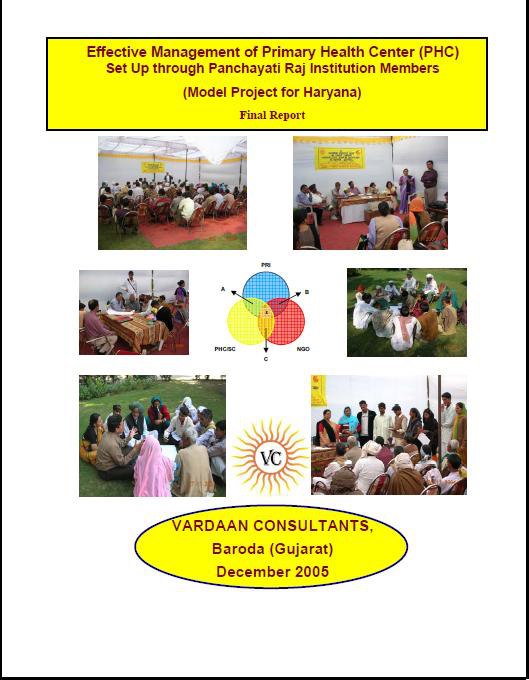
Model: Effective Management of PHC through PRIs under PPP model
Changing the public health scenario in the rural areas of India is a challenging task because of the many constraints associated with it. The PRI system of our country is considered the backbone of federal democratic system where, at the bottom every gram panchayat had power of governance in the matter of planning, budgeting, and distribution of resources’ equally. Moreover, the Tenth Plan has prioritized reorganization and restructuring of the existing health care infrastructure at primary, secondary and tertiary levels through a decentralized process with the existing structure of the Panchayati raj system so that, the rural communities get the desired level of health services and improve our country health index. An attempt for effective management of PHCs through Panchayati raj institutions members by involving PHC staff and NGO volunteers as equal partners. The TRIO management model was pilot tested without any compulsion in very informal way and was found to be effective in the management of any public health institutions. The policy makers and programme managers will use the TRIO management model under the rural health mission with proper structural integration and assigning mandatory roles and responsibilities in the PRI system and public health administration for better transparency and community participation. Circulation: Restricted for more details contact drharshitsinha@consultant.com
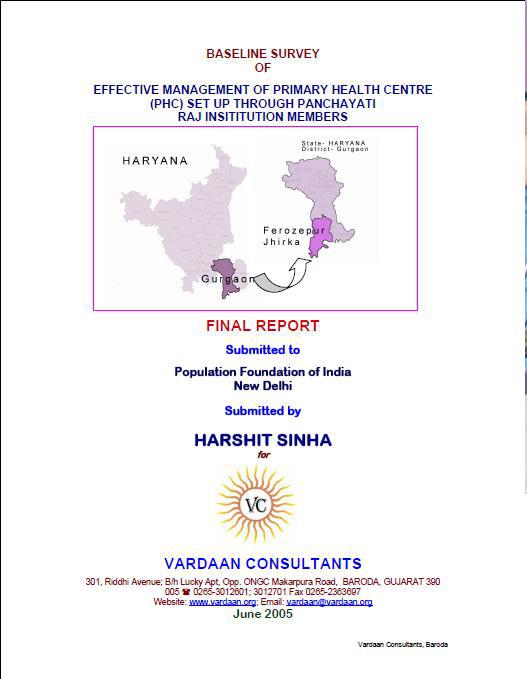
Baseline Survey: Effective Management of PHC through PRIs in Gurugaon, Haryana
The project with the aim for the effective management of the PHC set up through PRI members is being conducted in the Ferozpur Jhirkha – a backward block of Gurgaon district. The baseline survey emphasize on assessment of the impact of the interventions in improving, sustaining and providing quality of health and family planning services to the resident community. The idea behind such study is to prepare a strategy involving Panchayati Raj Institutions members for an effective management of PHC set up and creates a model PHC that not only sustains, but also provides quality of health and family planning services. In order to test the above-mentioned strategy, a baseline survey was executed in the nine project villages to generate the benchmarks estimates for various indicators in the project area, measure the impact of the public health services, analyze the role of the district health officials, Panchayati Raj institutions, and grassroot level NGO and civil society. Situation analysis of the services center (PHC/SC) for manpower, materials supplies, training needs and quality of care was also explored. About seven different data schedule were used to collect the baseline information from three PHCs and six sub-centers under the defined criteria. Circulation: Restricted for more details contact drharshitsinha@consultant.com
Evaluation of Hospital for Mental Health in Vadodara
The much-neglected mental health problem in health sector is widely recognized by the Government of Gujarat (GOG) in collaboration with the Government of Netherlands Development Cooperation programme. The growing numbers of mentally ill patients in the world draw attention of policy makers and programme managers to explore the problem deeply and thoroughly. In Gujarat, it is estimated about 2 to 3 million people suffer from some or the other mental health problem. About one million of population in the state are high-risk cases and severally mentally ill. There are number of reasons to look into the mental health problem as number of complexities related to institutional infrastructure, service delivery, customers or consumer perspective, service delivery perspective, public-private and voluntary partnership and defining the standard protocols in service delivery under the said Mental Health Act of 1987. Besides, number of economic, social ethical and rehabilitation issues are yet to define properly. The Mental Health Mission project in Gujarat was implement to ensure the availability, accessibility to the vulnerable population and see that it gets integrate with general health services. The community participation in developing self-help group is one the prime objective of the mission project. Taking lead from this, current study is one the ongoing efforts in the pilot phase for the Hospital for Mental Health, Vadodara. It identifies the demand in the matter of material supplies and manpower for capacity building so that the said objective could be attain. Current study would be very helpful in understanding the concern issues raised in the current study for the policy and programme managers and appeal to other professional to play a significant role in promoting research in mental health for future. Circulation: Restricted for more details contact drharshitsinha@consultant.com
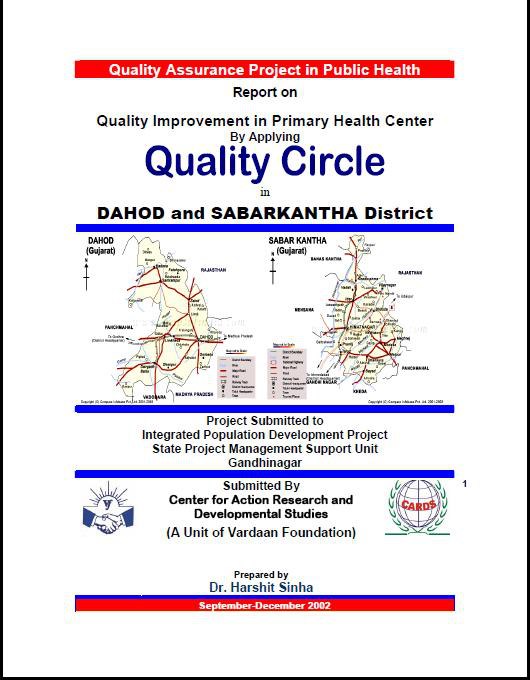
Quality Assurance Project: Application of Quality Circle in Public Health
Under the Integrated Population Development (IPD) project, the major thrust was to improve the quality of health services imparted in the public health institutions of five IPD selected districts through the quality assurance project. In 2002, the Government of Gujarat selected Vardaan Foundation to introduce concept of Quality in Public Health with the support of IPD 5 Project of UNFPA. The Board of Trustee deputed Dr. Harshit Sinha to materialize this challenge as known to be mammoth task within the span of 120 days. Dr. Harshit Sinha pilot tested the concept “QUALITY CIRCLE” for improving quality at primary, secondary and tertiary levels two IPD districts of Gujarat. He developed the model to introduce concept of quality in Public Health using the formulae ‘4ME’ as Manpower; Material, Measurement, Monitoring and Environment. He has also developed a instruction manual first time of its kind. After the end of UNFPA assisted, IPD 5 project, the idea and concept was became the inspirational source to develop a separate quality cell under the commissionrate of Health in the state of Gujarat. The report is available online at http://varfound.org/wp-content/uploads/2015/01/QC_Final_Report.pdf